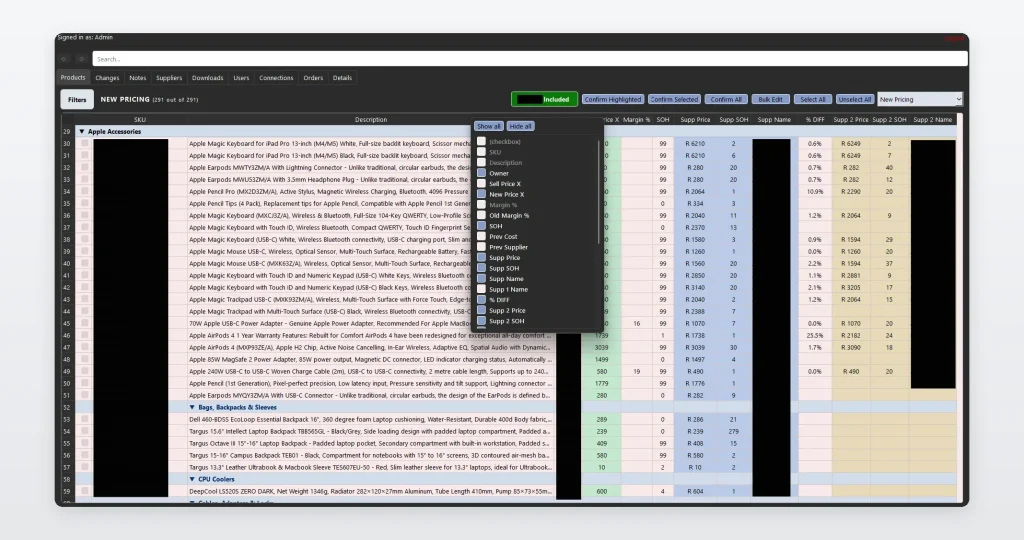
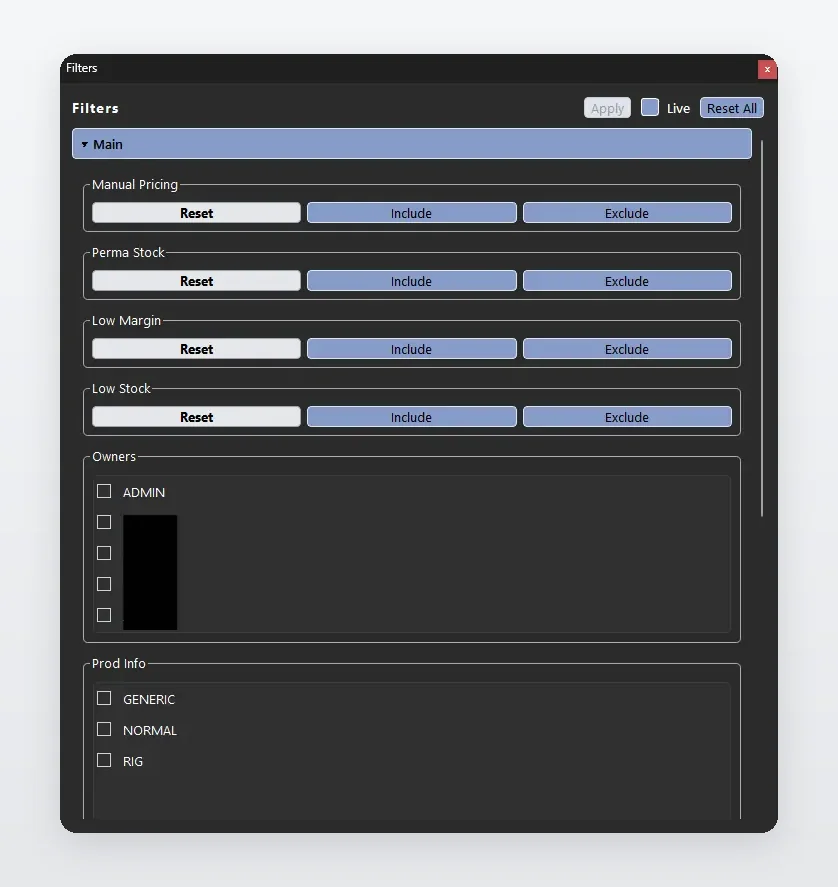
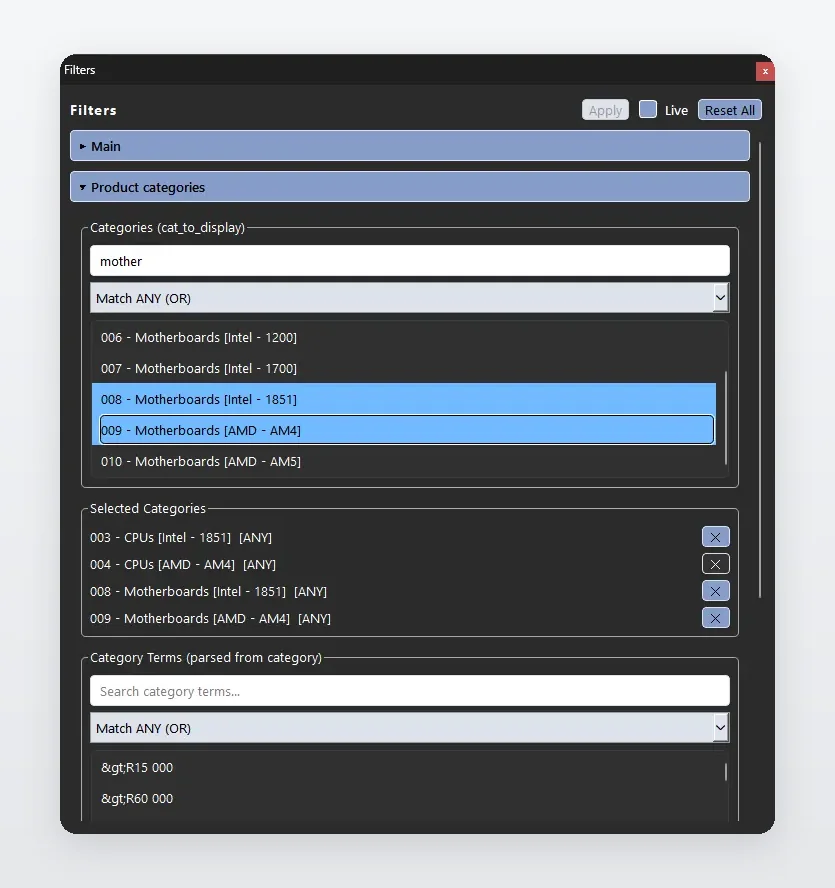
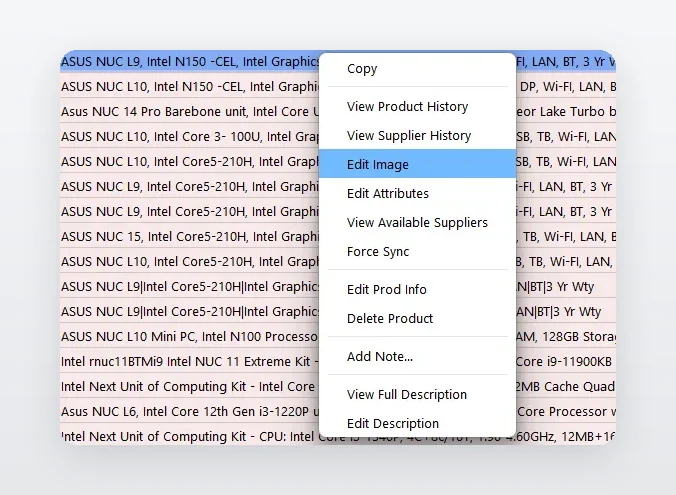
A custom-built Python-based Product Information Management (PIM) platform designed to centralize and automate critical business operations. Deployed across multiple Windows workstations, the system serves as the core hub for product information, supplier integrations, inventory synchronization, pricing management, auditing, and e-commerce updates. Built around internal business workflows, the platform provides secure, near real-time data synchronization and extensive automation to improve efficiency and maintain data consistency across systems.
Key Features
- Centralized product management platform used across multiple departments
- Supplier data integration and synchronization
- imports and processes supplier catalogues
- reconciles stock and pricing information
- supports automated product enrichment and updates
- Ability to auto update front-end facing data with preset margins for immediate price updates.
- Internal product and inventory management
- maintains product information and stock levels
- manages pricing and custom business rules
- supports internal operational workflows
- Comprehensive auditing and history tracking
- records product and pricing changes
- maintains historical records for traceability
- provides visibility into system activity
- FastAPI-based backend architecture
- REST API acting as a middle layer between PostgreSQL and Windows desktop clients
- centralized business logic and validation
- secure communication between applications
- PostgreSQL database design and administration
- schema design and optimization
- efficient querying and indexing
- backup and recovery procedures
- Optimized trigger functions on data change
- WooCommerce integration
- integrates with WooCommerce REST APIs
- processes WooCommerce webhooks for synchronization events
- automatically updates products, stock levels, and pricing
- reconciles website and internal product information
- Internal accounting system integration
- exchanges operational data with existing accounting systems
- supports business and financial processes
- Automation and near real-time processing
- scheduled background services
- automatic supplier updates
- product synchronization and reconciliation
- Security and reliability
- Multi-Factor Authentication (MFA)
- backup and recovery mechanisms
- validation and error handling
- designed for continuous day-to-day operation
- Multi-user desktop deployment
- deployed across multiple Windows PCs
- supports concurrent users and departments
- responsive desktop interface for operational staff